| The Beijen/Beyen Family Site by Laurens Beijen |
 |
|
The homepage The overview of the site The next page The previous page |
The list of first names The photo gallery Searching this website Comments or questions |
Born on the island of TernateHendrik Rudolph Beijen Junior (12.5) was born in 1881 (according to other sources in 1880 or 1882) on the Moluccan island of Ternate, in the eastern part of what was then the Dutch East Indies. His father, Hendrik Rudolph Senior, was at that time the island's military commander. His mother was named as "the native woman Dinah".When Hendrik Senior was honourably discharged from the army a few years later, he moved to Soekaboemi (Sukabumi) on West Java. Hendrik Junior and his mother presumably moved there as well. Below is a childhood photo of Hendrik Junior. 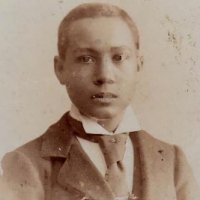 To the Netherlands for his educationIn 1895, Hendrik, then 13 or 14 years old, went to the Netherlands for his education. In September 1895 he was enrolled at a boarding school in Elburg. In 1897 he moved to relatives in The Hague. He probably lived with his uncle Pieter Wilhelm Adriaan Beijen, who had returned from the Indies and acted as his guardian.It appears to have been his father's intention that Hendrik would attend the Royal Military Academy in Breda. That plan did not go ahead, however, perhaps because he did not meet the admission requirements. In 1899 he was enrolled at the training college for machinists in Amsterdam. Many graduates of that training found work with companies in the Indies. Hendrik apparently did not like that training: in 1901 he was "discharged at his own request". Misconduct in the armyIn February 1901 Hendrik Rudolph enlisted as a volunteer soldier for six years with the infantry. In October 1901 he became a corporal, but three years later, after receiving a large number of disciplinary punishments, he was demoted back to soldier. In 1905 and 1906 he had to appear before the military court twice because of more serious offences. Both times he was sentenced to imprisonment. On 12 March 1906 his army contract was terminated early.A relationship with Lies KotteShortly after leaving the army, Hendrik went to live in the house of Georgius Kotte in the municipality of Bemmel in Gelderland. Until shortly before that, Kotte had been a café owner in Vlissingen. Hendrik had presumably met Lies Kotte, the café owner's eldest daughter, when his company was stationed in Vlissingen.On 22 and 29 April 1906, a few weeks after Hendrik's move to Bemmel, the intended marriage of Hendrik and Lies was announced at the town hall. Hendrik was then 24 years old and Lies only 17. One might have expected the marriage to take place shortly after those two announcements. However, that never happened. It was later said within the family that, on reflection, Lies's father did not consider Hendrik a suitable husband for his daughter. On 5 May 1906, six days after the second marriage announcement, Lies gave birth to a son. The child was given the first names Hendrik Rudolph Marie Johan. This makes it very likely that Hendrik Rudolph Beijen was the child's father. However, Hendrik was not named in the birth certificate, so the boy was given the surname Kotte. The child was raised by Lies's parents and for many years believed they were his parents. Half a year after the birth of Lies's son, the family moved from Bemmel to Utrecht. Hendrik probably returned to the Indies not long after that. I have written an article for a Dutch magazine about what happened next to Lies and her son: Een lang verzwegen familiegeheim (A long-hidden family secret). Back in the IndiesSources from the Indies show that Hendrik was back in the Dutch East Indies by 1908 at the latest.According to newspaper reports from 1911, he was prosecuted for breach of trust as an employee of the Tjilatoe estate (probably a plantation). He was initially sentenced to three months' imprisonment, but was acquitted on appeal. In 1914 he was appointed machinist at a disinfection station on one of the islands of the Riau archipelago. He also lived and worked in Garoet (Garut), Padalarang and Tasikmalaja, all on West Java. The photo below dates from that period. 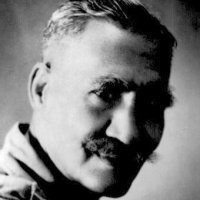 His career did not always run smoothly. For instance, in 1939 he was declared bankrupt by the Court of Justice in Batavia. According to the judgment, his profession at the time was agent ("zaakwaarnemer"). Murdered in a robberyThe photo of Hendrik below was taken after the Second World War.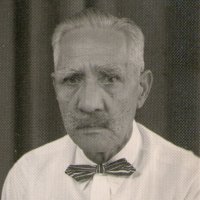 Like many other residents of Indonesia with Dutch ancestors, he applied for a Dutch passport around 1950. However, he remained in Indonesia. In 1952, in the turbulent period following Indonesian independence, Hendrik's life came to a sudden end. As the administrator of a plantation, he was travelling with three other men to pay the workers' wages. Armed robbers stopped the car they were in, seized the money, and shot Hendrik Beijen dead. Children acknowledged by HendrikAs far as is known, Hendrik Rudolph Junior remained unmarried. He did, however, acknowledge three children by native women: a son and two daughters. They are described below.Jan Fortuin Beyen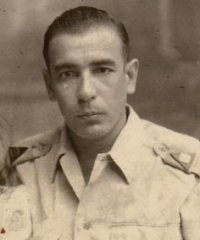 Jan Fortuin Beyen (or Beijen) (13.3) was born in 1912 in Garoet (Garut) on West Java, the son of the "native" woman Maskanah. Hendrik Rudolph Beijen Junior acknowledged him as his son. Within the family it was said that Jan represented a fortune for his father, and that this was how he came by his middle name. Jan Beyen joined the KNIL (Royal Netherlands East Indies Army). During the Second World War he was taken prisoner by the Japanese and transported to the Kawasaki prisoner-of-war camp near Tokyo. There, the prisoners of war were forced to perform labour at a shipyard for the Japanese war industry. 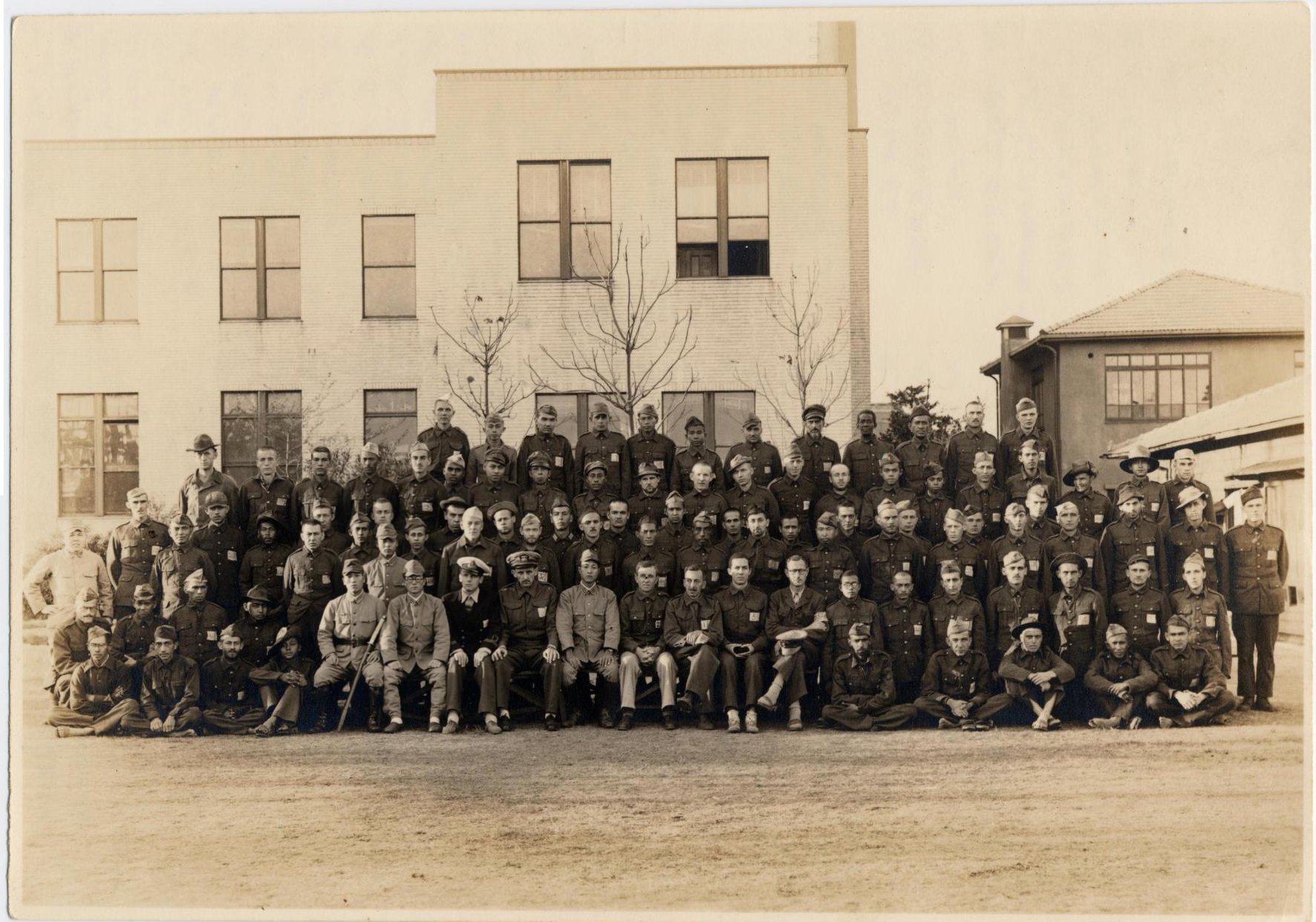 The photo above (Copyright by Al R. Young. All Rights Reserved. Courtesy of Al Young Studios; click on it for a larger version) comes from the American writer Al Young. In June 2009 he published the book My Father's Captivity about the experiences of his father, who was held prisoner in that same camp. In the photo, Japanese guards sit seemingly peacefully alongside American, Dutch and Australian forced labourers. Jan Beyen is sitting in the front row, fifth from the right. He is more clearly visible in the enlargement below. 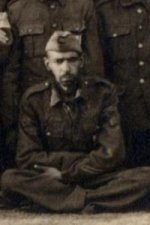 Below are the front and back of the prisoner-of-war card for Jan Beyen, made out by the Japanese. Click on the images for an enlargement. 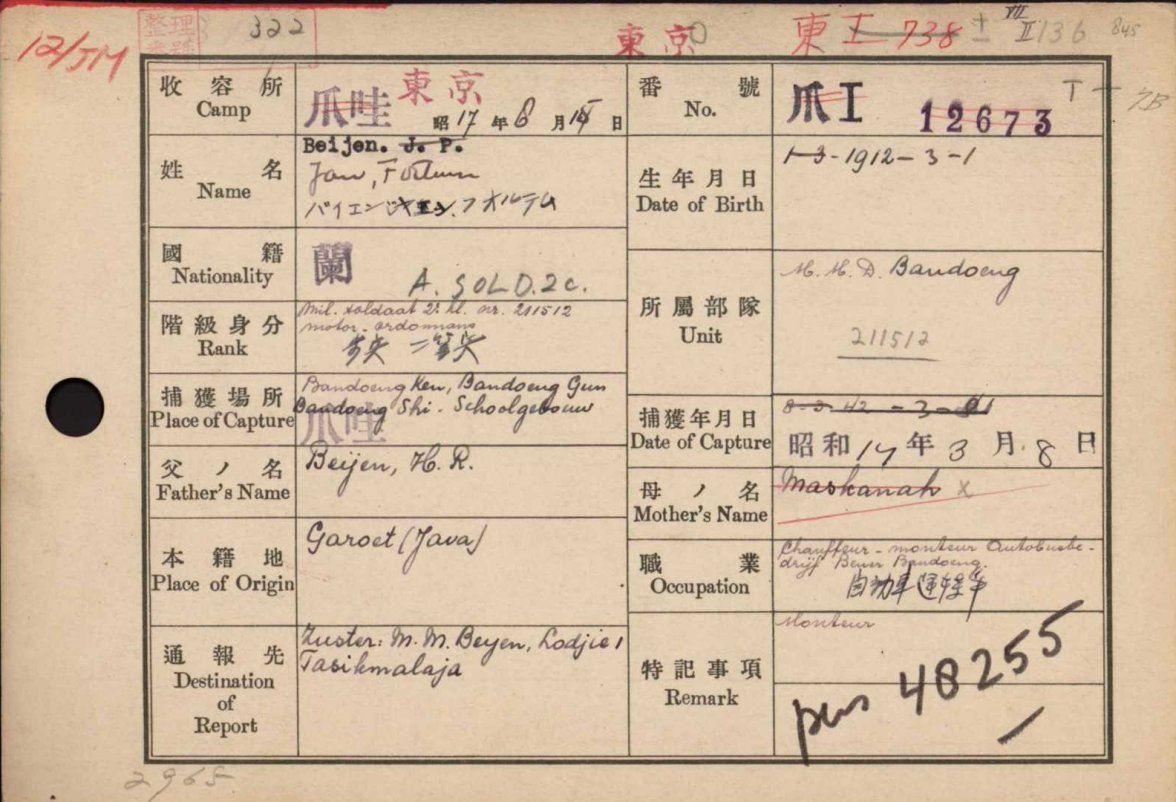 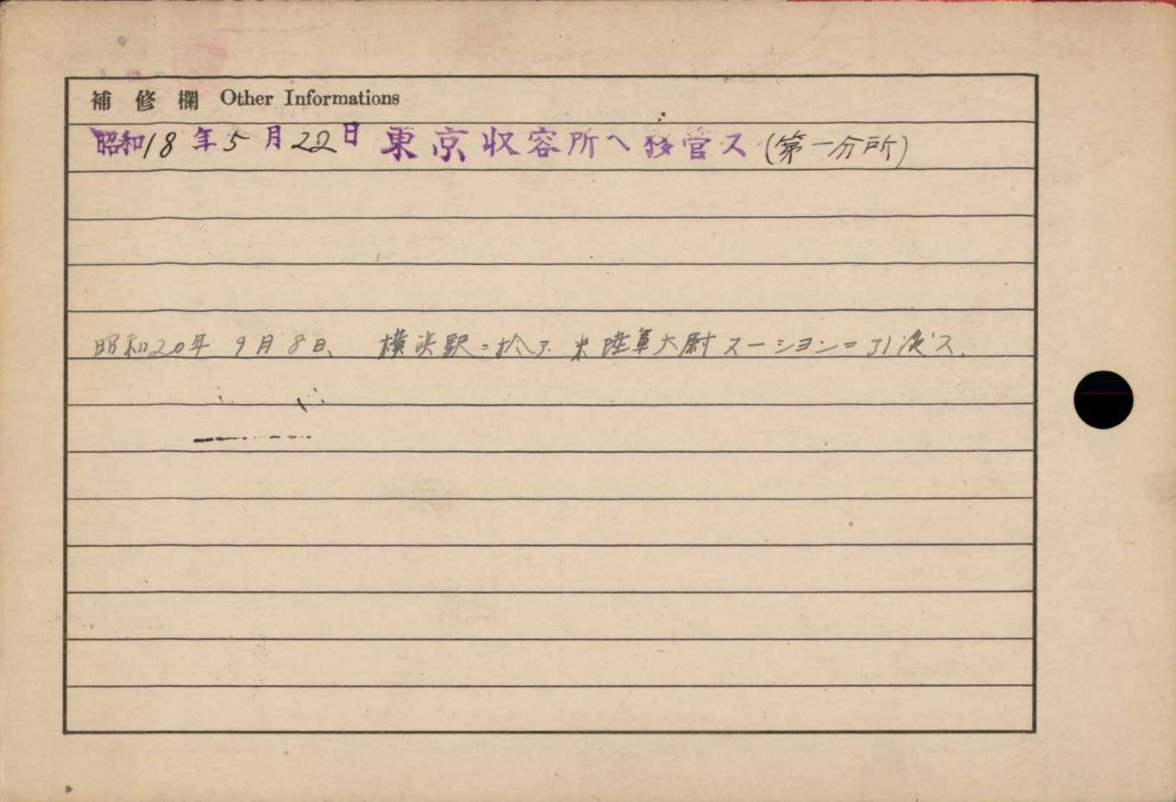 The front of the card shows that Jan was a private second class and served as a motorcycle dispatch rider, and that he had also worked as a driver-mechanic for a bus company in Bandoeng (Bandung).
Hendrika Regina Beyen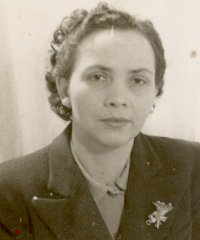 Hendrika Regina Beyen (13.4) (known as Rika) was born in 1914 in the village of Leles in the district of Garoet (now Garut) on West Java. Her mother was a "native" woman named Siti Patimah. It is uncertain who her father was. According to family members he was known by the name Misley and was a colleague of Hendrik Rudolph Beijen/Beyen at the Bantardawa rubber estate. The story goes that Misley set off on a voyage to the Netherlands before Hendrika was born. He is said to have asked Hendrik to acknowledge the child if he were to die during the voyage. If it were a girl, she was to be given the name Regina. Misley, about whom nothing further is known, is indeed said to have died during the voyage. Hendrik acknowledged the child and gave her the names Hendrika Regina. In 1932, in Batavia, Rika had a son from a relationship with Evert van Wagensveld, who had been born in 1893 in Ede. Rika and Evert are said to have been only informally married. The boy was nevertheless given the surname Van Wagensveld. The relationship ended after a few years. In 1939 Rika married the accountant Theodorus J.A. Daems in Batavia; he had been born in 1894 in Amsterdam. A son had already been born from their relationship in 1937. Until his parents' marriage he carried the surname Beyen, and only afterwards was he officially named Daems. In 1943 they had a second son, also in Batavia. In 1952 Rika left for the Netherlands with her children. Daems followed later. He died in 1960 in Noordwijkerhout. Rika died in 1993 in Almere. Maria Magdalena Beyen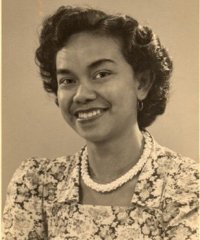 Maria Magdalena Beyen (13.5) (known as Lenie) was born in 1930 in Tasikmalaja on West Java, the daughter of Hendrik Rudolph Beijen (Junior) and Martha Serina. During the Japanese occupation of the Dutch East Indies, Lenie was interned together with her mother in one of the notorious Japanese camps. After the liberation she was reunited with her father. When her father was murdered in September 1952, Lenie was in the Netherlands for a secretarial training course. She returned to Indonesia soon afterwards. In December 1952 Lenie married Anton Eduard (Eddy) de Roy van Zuydewijn in Tasikmalaja. He had been born in Malang on East Java and held a managerial position on a plantation. Lenie and Eddy had three sons. In 1958, when the conflict between Indonesia and the Netherlands over New Guinea was at its height, the family left for the Netherlands. They went to live in Heerlen. Eddy died there in 2010, Lenie in 2015. |
|
The next page The homepage The overview of the site |
The top of the page Searching this website Comments or questions |